URI art professor to design new visual identity for Stanton-Davis Homestead Museum | Daily-news-alerts
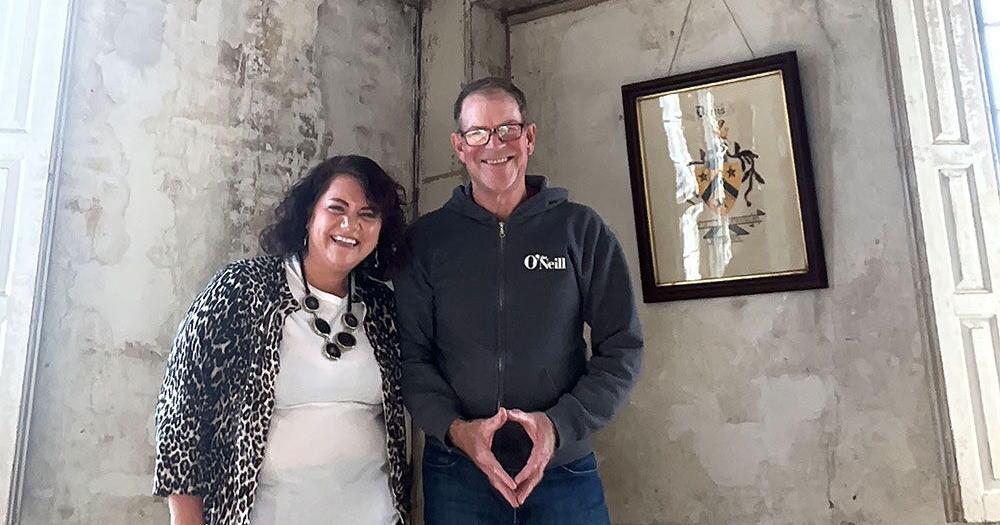
STONINGTON — The 1677 Stanton-Davis Homestead Museum is taking a leap into the 21st century thanks to Clarisa Carubin.
Carubin, an associate teaching professor of graphic design at the University of Rhode Island, has volunteered her time and expertise to help the museum create its first unified digital identity, including branding, interpretive materials and educational content.
Carubin, who serves on the museum’s board of directors, is working closely with the museum’s president, Brian McCormick, according to Paige Monopoli, a communications coordinator at the university.
Carubin’s contributions, Monopoli said ,”are driven by a commitment to the community, especially those who have Native American heritage or African American narratives.”
The partnership also highlights the connection between the museum and the university which offers students the opportunity to engage in hands-on, real-world design projects while serving a historic site that holds significance across state lines.
“I chose Clarisa for a number of reasons,” McCormick told Monopoli. “When I first proposed the project to her, it was clear that she was looking beyond it as just a deliverable. She was very curious about the layers and themes of the homestead.”
“She understood right away that this was a very unique project with enthusiasm and motivation,” McCormick said.
The museum is the oldest house and first working farm in Stonington. It was built in 1677 by Connecticut Colony co-founder Thomas Stanton, one of the founders of Stonington, with additions in 1720 and 1750. In the seventeenth century, Monopoli said, Stanton negotiated between the settlers and Native American tribes. His grandson harvested salt marsh hay to feed Washington’s Revolutionary War horses.
“The farm also housed enslaved people, including, notably, Venture Smith, who worked his way to freedom,” Monopoli said.
Whit Davis, whose family has farmed on the greater homestead property continuously since the mid-18th century, created the nonprofit museum in 2004. The museum is now an endangered national landmark, and board members have a goal to make it a living history museum with an educational center used for research.
“The land is here to tell the story about human resiliency, as it is told by different populations that intersected at the time between the Tribal Nations, Europeans, and enslaved people,” McCormick said. “From a practical standpoint, farms are in decline, and people need to become more aware of supply chains.”
“It’s extremely important that people know where their food comes from, and to do so, they need to support local supply chains and agriculture,” said McCormick, “and the Stanton-Davis Homestead tells the story of a continuously active family farm for over 350 years, one of the oldest in New England.”
“Carubin is often specific and intentional about the freelance projects she decides to take on because of her dedication and full-time commitment to URI,” Monopoli said. “When Brian McCormick reached out to her for a visual design for the museum, she noted they did not have a visual identity whatsoever and was curious to learn more about the history.”
McCormick invited her for a tour where she observed the many areas that need to be rebuilt and refurbished.
“I was observing the floor, windows, and cornfields, but it all clicked when I went to the attic,” Carubin said. “Brian pointed out little inscriptions on the wall, which to me appeared to be made by a slave living in the house, counting down his days.”
“We need to tell more stories about slaves and the native people of the area,” she said.
Carubin said she will start the process with creating a visual identity — which includes a logo, typography, and a color palette.
Once the museum is able to establish an identity, Carubin will move on to more creative endeavors like business stationery, brochures, visitor-focused overviews, posters, flyers, seasonal events, and website and social media design, Monopoli said.
Born into an artistic family with an architect father and industrial designer mother, Carubin’s “creativity is in her DNA,” Monopoli said.
“Art was often discussed in their home, and she eventually found herself studying to become an industrial designer, too,” she said. “However, when she started designing in Argentina, she found her way to graphic design.
“Communicating ideas visually came naturally,” Monopoli said.
Carubin built the graphic design program at URI from the ground up, Monopoli said.
“I want to ensure that students and the community can benefit from this initiative,” Carubin told Monopoli. “I’d love to receive funding to create a graphic design center that will operate from URI, and from there we can help more nonprofits in the future.”
“It’s a fantastic opportunity to connect students with a real client so that they can understand deadlines, how to take feedback from the client, and so on,” said Carubin.
link