



Divyaditya Shrivastava is the CEO and founder of Paladin.

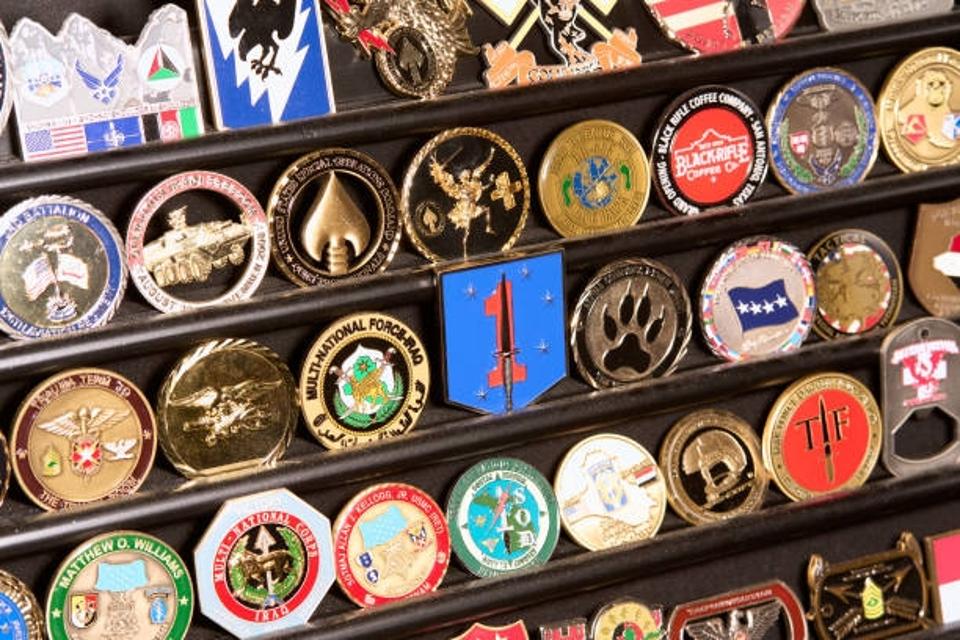
To the uninitiated, a challenge coin is just a disc of metal. It could be attractive, perhaps weighty. It’s something you might find in a collector’s case or the depths of a drawer. But to those who hold them, especially in public safety, challenge coins are imbued with stories, camaraderie and honor. They mark achievements, commemorate shared trials and serve as lasting reminders of a moment in time or an ongoing legacy. Just like a great challenge coin, a great product must be specific and human.
A well-made coin feels solid: Its engravings are precise, each symbol is chosen purposefully and each color is designed for a specific person, moment or mission. Anyone in law enforcement or emergency services can spot a “bad” coin instantly, and they’re usually missing that elusive human connection that makes you want to keep it, put it on display and show others.
This lesson extends to every aspect of great product design: creation with specific intent, made for human connection and function.
Consider HubSpot, which has obsessively focused on user customization, allowing users to mold the tool to their needs. Whether you’re a small-business owner or a global marketing team, HubSpot invites you to shape workflows, dashboards and data to your own image. The intelligence is there, but the action is on the human, who is empowered, recognized and given the tools to create their own outcomes.
When a product allows for even greater specificity, it becomes more human. The more it can adapt, the more it feels like it was made just for you, especially in the age of robotics and AI. Waymo’s self-driving cars are a vanguard of this movement, a vehicle that can perceive its surroundings and make decisions in real time. Yet anyone who has ever been late to the airport in a robotaxi knows a subtle but crucial truth: Sometimes, you crave the human touch. You want your driver to understand urgency, to read your face or voice, to make a split-second, judgment-based decision to slip around a slow-moving car.
Robots will master these nuances, but only if we approach their design with the same specificity and connection we demand from our most cherished products. Every use case must be understood, every edge case respected and built with specificity. This leads to diverse products that can achieve the human results we’re all looking for.
Nowhere is specificity more vital than in public safety technology. Drones are fast becoming an essential part of emergency response. In some cities, drones are deployed to respond to 911 calls, surveying accident scenes, delivering life vests or even providing live video to first responders before they arrive. These drones are not built like delivery drones carrying pizzas, nor are they designed like film drones capturing sweeping vistas. Every element from payload capacity to flight endurance, from camera quality to remote-controlled precision, is dictated by the needs of saving lives.
The reason these drones save lives is not because they are the most expensive but because their design is specific. They are tailored for a purpose, crafted in partnership with the people who use them under pressure and refined by feedback from real-world emergencies.
In contrast, a drone meant for pizza delivery might prioritize battery life and flight time, perhaps with an insulated payload bay to keep the food warm. The design differences are not superficial; they are core to the product’s success. If you tried to use a pizza drone for understanding the spread of an active structure fire, the result would be disappointing and might even be dangerous.
The landscape shifts again when we look at military drones. In many cases, military drones are engineered for single-use missions: one flight, one target and then they are gone. In this context, the design imperatives radically change. Reliability is still valued, but the tolerance for risk is different: A drone may be designed for detonation or destruction, not for years of repeated use. There are material choices, cost constraints and even the software focuses on the success of a single mission, not the longevity of the hardware.
Compare this to public safety drones, which must operate each day, sometimes for years, in unpredictable real-world environments. Here, reliability is paramount. The systems are built for repeated use, easy maintenance and rapid updates. Every sensor and circuit must withstand the wear and tear of constant deployment, because lives might depend not on a single success but on predictable excellence day after day.
Once again, companies that succeed in this space are those that resist the lure of a universal solution. The winning systems are built with unflinching specificity for their domain. A military drone’s blueprint will never serve a firefighter’s needs. A public safety system’s requirements would only weigh down a battlefield device. The lesson repeats: Know your user, build for their world and let specificity lead.
Across every industry (whether you’re making software, cars, drones or a challenge coin), the same principle holds true: Detail and human connection are everything. The best products are those that feel inevitable, as though they could not have been made any other way for any other person. They are specific, not generic; thoughtful, not hurried; meaningful, not merely functional.
AI is an extraordinary tool, but it must be made human. This does not mean pretending it is a person but shaping it so that it understands, adapts and connects at a human level. Product designers must ask themselves: Are we crafting something that will enable human outcomes, desires and wants?
The challenge coin remains a powerful metaphor—a small object, heavy with meaning, that shows us how the union of detail and connection can transform the ordinary into the extraordinary. As we build the future, let us remember that the greatest honor we can pay to technology is to make it worthy of the people who will use it. That is the art of detail and the true measure of successful design.
Forbes Technology Council is an invitation-only community for world-class CIOs, CTOs and technology executives. Do I qualify?
link