


/https://tf-cmsv2-smithsonianmag-media.s3.amazonaws.com/filer_public/b2/29/b2299446-0e30-4afb-a10f-ecf7c8e42c1f/installation_image_of_design_and_disability_at_va_south_kensington_17.jpg "From Fashion to Fidget Spinners, This London Exhibition Celebrates Disabled Design, Innovation and Joy")
“Design and Disability” features 170 objects created by disabled artists, designers, photographers, inventors and more

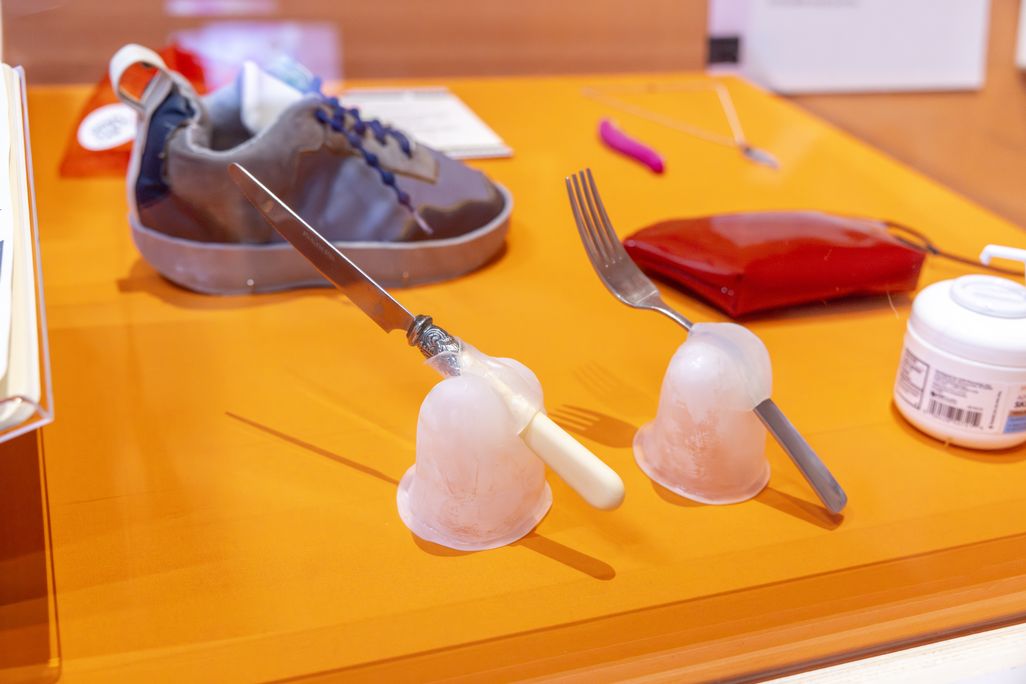
Adapted kitchen utensils on display at the V&A
V&A
Featuring the original fidget spinner, a self-tightening shoe, a hands-free vibrator and much more, a new exhibition at London’s Victoria and Albert Museum (V&A) places disabled designers front and center.
“Design and Disability,” which runs through February 15, 2026, features 170 objects created by disabled people and their collaborators, ranging from chairs and video game controllers to colorful clothing and portrait photography. The exhibition paints an expansive picture of how disabled people have contributed to innovations in design and culture over the past eight decades.
“This exhibition shows how disabled people are the experts in our own lives, and have made invaluable contributions to our designed world,” Natalie Kane, the exhibition’s curator, says in a statement. The show, Kane adds, presents “a strong culture of making that has always been central to disabled identity.”
Clothing by Ntiense Eno-Amooquaye on display in “Design and Disability” Isobel Greenhalgh via V&A/https://tf-cmsv2-smithsonianmag-media.s3.amazonaws.com/filer_public/64/e8/64e808a1-e9f4-4c50-9176-3e8b8c97a584/installation_image_of_design_and_disability_at_va_south_kensington_photo_by_isobel_greenhalgh.jpg)

Divided into three sections—“Visibility,” “Tools” and “Living”—“Design and Disability” highlights intimate and personal dimensions of disabled life, as well as communal and political ones. “Visibility” traces visual representations of the disabled, from advancements in accessible fashion to the use of photography by disabled artists to control their own images. “Tools” explores how disabled designers have created accessibility, practicality and beauty for themselves, and “Living” examines how disabled people have challenged the world to be more inclusive.
Access is baked into the exhibition itself, which includes extra seating, rest areas and tactile objects and surfaces for blind visitors. The gallery considers the principles of DeafSpace design, which aims to make built environments more accessible to deaf and hard of hearing people. At the beginning of the show, non-disabled visitors are encouraged to “witness and engage as an act of solidarity,” even if some of the ideas presented may be upsetting.
Quick fact: Disabled artists in America
In 2023, the San Francisco Museum of Modern Art acquired more than 100 works by disabled artists—one of the largest acquisitions of its kind by any American museum.
Landmark commercial designs are on display, from the world’s first commercially available adaptive Xbox controller by Microsoft to the original prototypes for OXO Good Grips by Smart Design, a product line of kitchen tools with ergonomic, non-slip handles.
The exhibition also features DIY innovations, such as Conor Foran’s Dysfluent magazine, which gives graphic representation to stammering by elongating and repeating certain letters and words. It also showcases a black T-shirt with the words “Piss on Pity” written in pink, which was worn to protest a British telethon’s dehumanizing portrayal of disabled people in the 1990s, as the New York Times’ Deyan Sudjic reports.
Disabled protesters wore this T-shirt to oppose a telethon fundraiser in London in 1992. National Disability Art Collection and Archive via V&A/https://tf-cmsv2-smithsonianmag-media.s3.amazonaws.com/filer_public/f4/97/f4978024-f573-42df-85bb-2af12a283064/piss_on_pity_t-shirt_1992__image_courtesy_of_wwwthe-ndacaorg.jpeg)

The show places an emphasis on agency and self-definition. First Swim After Rebirth by photographer Marvel Harris is a “joyous self-portrait taken following gender-affirming surgery,” per the statement. Also on view is a dazzling costume for the annual Notting Hill Carnival by Maya Scarlette, a self-taught fashion designer with ectrodactyly, which was inspired by Sandro Botticelli’s The Birth of Venus.
Reviewing the show for the Guardian, disability journalist and advocate Lucy Webster notes that the show has an expansive, inclusive definition of “disabled,” featuring designs catering to a wide variety of impairments.
“In this way, the exhibition goes far beyond the tired assumption that access means a ramp,” Webster writes. “It is also great to see disability-led design from all areas of life—not just care and housing, but also gaming, socializing, working, traveling, urban planning and more. So often disability is treated as a monolithic experience, but the V&A is showing it in all its diverse, multifaceted glory.”
“Design and Disability” is on view at the Victoria and Albert Museum in London through February 15, 2026.
link