Engineering club inspires thoughtful product design
What began as an idea between two students has quickly grown into a space where members can experiment, build and gain hands-on experience while working toward solutions that could have a lasting impact on campus.
Former roommates Max Russo, ‘28, and Elliot Padrick, ‘28, combined their product development and prototyping skills to create the Sustainable Engineering Club. Russo, an engineering and business student, and Padrick, an earth and environmental sciences major, debuted the club on campus at the fall club fair after first developing the idea in Integrated Business and Engineering 50, a course instructed around the product development process.
Since launching, the club has grown to more than 40 active members and meets Thursdays at 4:30 p.m. in Rauch Business Center Room 485. The organization attracts students from a range of majors interested in gaining practical experience outside of traditional coursework.
The club centers its work on collaborative teams that follow the full product development cycle, beginning with identifying problems through research and surveys before moving onto design and prototyping.
It’s currently working on three main projects: an air quality monitor, an urban window garden and a movement desk, designed to help students stay focused while studying. Padrick said each project addresses a specific challenge faced by students while incorporating sustainability into the design process.
Gray Rezzetano, ‘28, the project lead for the movement desk, said the club emphasizes understanding the problem before developing a solution.
“It very much feels like a collaborative effort, and everyone really believes in the vision,” Rezzetano said.
He said members examine existing approaches before building their own designs.
“What are people doing to solve it now, and how can we build something that solves it better?” he said.
Weekly general body meetings are used to coordinate progress, while most engineering and design work takes place in smaller project groups that meet outside of scheduled meetings.
Kosta Antonis, ‘29, a member of the air quality control team, said the monitoring project focuses on collecting environmental data across campus buildings. He said joining the club allowed him to work on practical engineering problems early in his college career.
Antonis said the team is designing low-cost, reproducible monitors to track factors such as temperature and humidity and identify potential ventilation and air circulation issues. The project reflects the club’s focus on using data and research to guide engineering decisions rather than building products without a defined need.
He also said he has a passion for the climate and ethics in everything they design and ultimately produce.
“As engineers, we have a responsibility to not be wasteful with our resources,” Antonis said. “It’s important to think sustainably when you’re creating something so you’re not harming the environment with what you’re innovating.”
Kelly Wu, ‘29, is a member of the urban window garden project, which similarly focuses on accessibility and sustainability.
Wu said the team is designing a self-watering planter system that fits in dorm windows, making it easier for students to incorporate plants into small living spaces without constant maintenance. She said the goal is to make sustainable choices more approachable for students living on campus.
“(We were) figuring out ways to incorporate plants inside, because a lot of people are deterred from that since there’s not a lot of space (to) water the plants all the time,” Wu said. “So we’re trying to figure out a system where we can incorporate a planter by the window that’s self watering.”
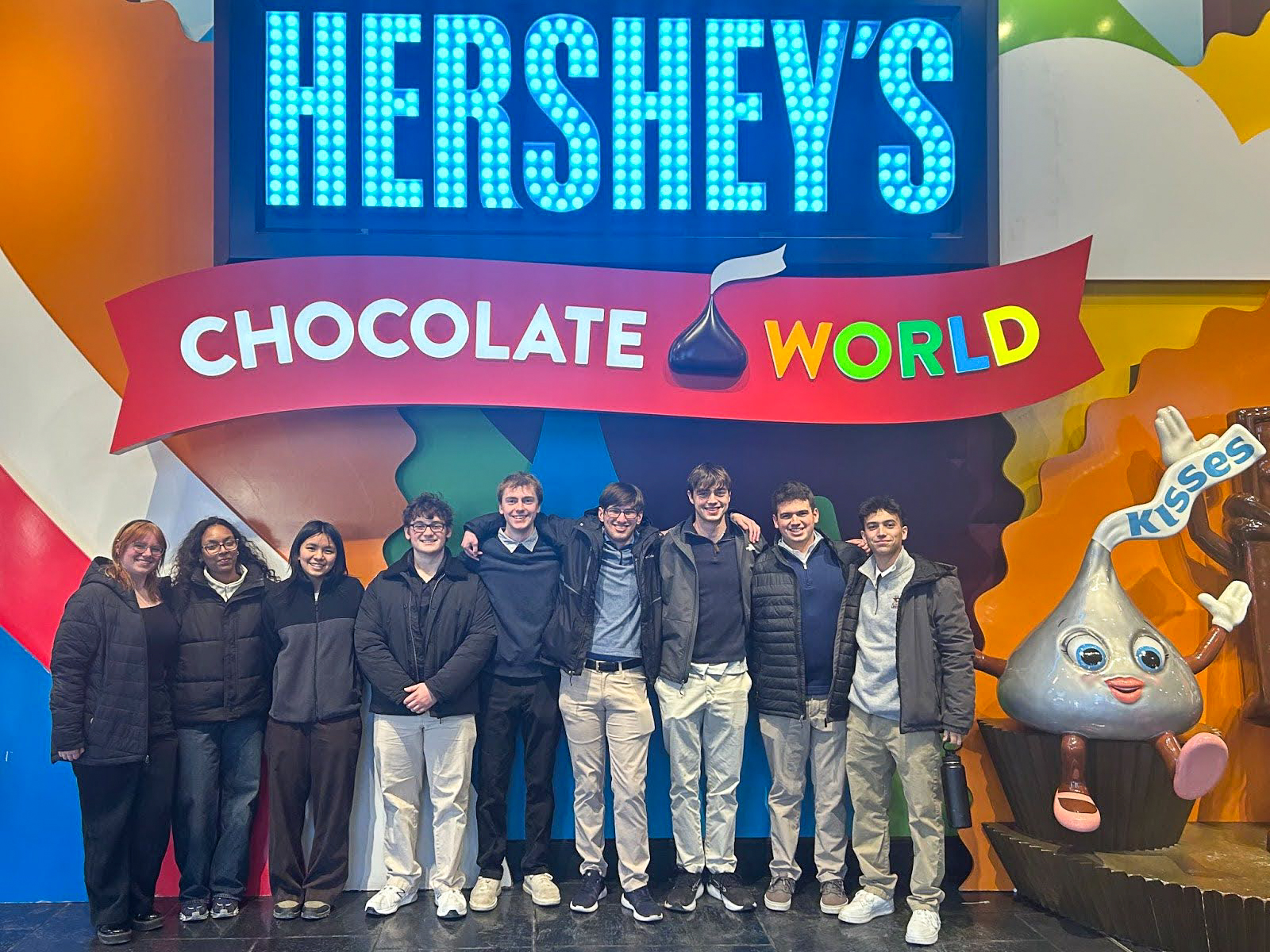
On Jan. 30, several members traveled to Hershey, Pennsylvania, to attend a conference hosted by Phoenix Contact, an electrical components manufacturer. During the visit, they toured facilities, observed large-scale production processes and spoke with engineers about sustainability initiatives in industry settings.
“I got a really good idea of what production really looks like,” Antonis said. “There are so many steps and processes, and seeing how they work together was really beneficial.”
Rezzetano said observing how manufacturing, design and sustainability initiatives intersect within a large company helped contextualize the work students are doing in the club, particularly for those early in their academic careers.
Beyond technical experience, Rezzetano said the club’s collaborative environment has contributed to its rapid growth. He said he hopes projects will eventually move beyond prototypes and contribute to sustainability initiatives across campus. Presenting data and designs to university administration is a long-term goal once projects reach later stages of development.
Wu said students don’t need to be engineering majors to participate, as projects involve research, design and problem-solving skills that apply across disciplines.
The club also plans two trips to product development companies — Smart Design in Brooklyn and Delve in Philadelphia — which will be announced later in the semester.
link