Interior Design Market Expected to Hit USD 248.15 Billion by 2034

Interior Design Market
Interior design is the art and science of enhancing the interiors of a space to create a more aesthetically pleasing and functional environment. Encompassing elements such as architecture, furniture design, color theory, lighting, spatial planning, and ergonomics, interior design plays a critical role in residential, commercial, hospitality, and institutional spaces. As lifestyles evolve and urbanization accelerates, the interior design market has witnessed significant expansion. The growing emphasis on wellness, smart living, sustainable materials, and personal expression is reshaping consumer preferences and design standards. With digital technologies and cultural influences shaping modern aesthetics, the interior design industry has become more dynamic, collaborative.
Market Overview
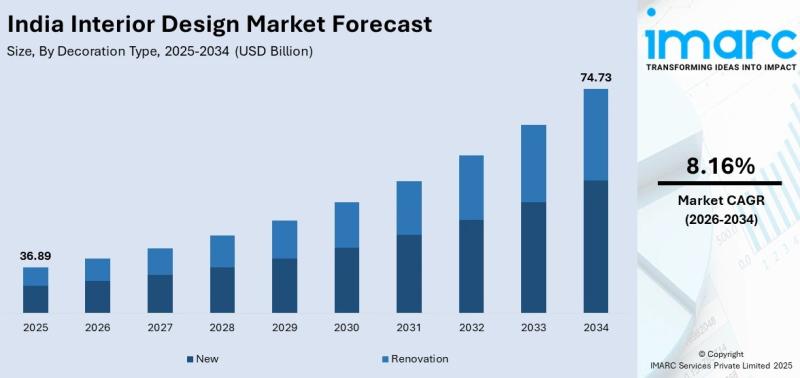
The Interior Design Market was valued at USD 145.24 Billion in 2024 and is projected to grow to USD 248.15 Billion by 2034, with a CAGR of 5.50% from 2025 to 2034.
Key Market Segments
1. Residential Interior Design
This segment accounts for a significant portion of market revenue, fueled by increasing home ownership, lifestyle upgrades, and the popularity of personalized interiors. Open-plan living, minimalist design, natural elements, and multipurpose furniture are key trends in residential design. Homeowners are also investing more in home offices, entertainment zones, and wellness spaces due to hybrid work lifestyles.
2. Commercial Interior Design
Commercial interior design covers office buildings, co-working spaces, retail stores, and mixed-use developments. As businesses seek environments that enhance productivity, brand image, and employee well-being, demand for thoughtful and ergonomic design is growing. Flexible layouts, collaborative workspaces, and biophilic elements are widely adopted in this segment.
3. Hospitality and Leisure Design
Hotels, resorts, restaurants, and recreational facilities rely heavily on interior design to create immersive experiences and establish a unique brand identity. This segment emphasizes themes, lighting, acoustics, and sustainable luxury. The rise in international travel and experiential tourism supports demand in hospitality interior design.
4. Healthcare and Institutional Design
Interior design in hospitals, clinics, and educational institutions focuses on comfort, safety, accessibility, and efficiency. Evidence-based design-incorporating nature, light, and movement-is increasingly used to enhance recovery and learning outcomes. Specialized considerations include infection control, space optimization, and sensory-friendly environments.
Get More Info @
Key Market Drivers
1. Urbanization and Real Estate Development
Rapid urbanization across developing economies is creating strong demand for professionally designed residential and commercial spaces. Real estate developers and construction firms increasingly incorporate interior design at earlier stages of planning to enhance property value and appeal.
2. Evolving Consumer Preferences
Modern consumers are more design-conscious and seek environments that reflect their identity, values, and lifestyle. Interior design services are becoming more accessible due to social media inspiration, online portfolios, and digital visualization tools. Consumers also expect designs that balance aesthetics with functionality and sustainability.
3. Rise in Renovation and Remodeling
Aging infrastructure and rising property prices are encouraging people to renovate existing spaces rather than build new ones. This has opened up new opportunities in remodeling kitchens, bathrooms, offices, and lobbies. Adaptive reuse of buildings is also increasing in urban centers.
4. Sustainability and Green Design
Environmental awareness has shifted client preferences toward sustainable materials, energy-efficient lighting, natural ventilation, and low-emission products. Green building standards and certifications are influencing design choices in both residential and commercial segments. Interior designers now consider the entire lifecycle impact of materials and products.
5. Technological Integration
Digital tools like 3D rendering, Building Information Modeling (BIM), and Virtual Reality (VR) are transforming how designers collaborate with clients and contractors. Smart home technologies, IoT-enabled devices, and automated lighting or HVAC systems are also being seamlessly integrated into interiors.
Get Free Sample Copy of Report @
Regional Insights
North America
North America holds a major share of the interior design market. High levels of disposable income, a mature real estate sector, and an appreciation for personalized living spaces drive demand. In the United States and Canada, sustainability, wellness-centered design, and smart technology integration are key focus areas.
Europe
Europe is a trendsetter in modern and classic interior design, known for its innovation, craftsmanship, and aesthetic diversity. The market here emphasizes eco-conscious design, historical preservation, and functional minimalism. Germany, the UK, France, and the Nordic countries are strong contributors.
Asia-Pacific
Asia-Pacific is the fastest-growing region due to urban expansion, economic growth, and a rising middle class. Countries like China, India, Japan, and South Korea are witnessing robust demand for residential and commercial interiors. Cultural heritage, space constraints, and evolving tastes drive regional design preferences.
Middle East & Africa
Luxury developments, hospitality expansion, and government investments in infrastructure are fueling growth in this region. Interior design is heavily influenced by traditional motifs blended with modern aesthetics. Gulf countries are especially active in commissioning iconic interior spaces.
Latin America
In Latin America, the market is gradually expanding due to increased investment in housing and hospitality. Brazil, Mexico, and Argentina are key markets where designers are blending local materials and cultural styles with contemporary trends.
Key Players in the Interior Design Companies include:
Aamir & Hameeda
Livspace
Sobha Interiors
Acme Interiors
Ace Interiors
Lipika Sud Interiors Pvt. Ltd.
Chaukor Studio
Futomic Design Services Pvt. Ltd.
Bonito Designs
Carafina Interior Designers
Buy Now @
Emerging Trends
1. Multifunctional and Adaptive Spaces
As urban homes and workspaces become smaller, there is a growing focus on adaptable designs that maximize utility. Foldable furniture, mobile partitions, and convertible rooms are gaining popularity.
2. Biophilic Design
Biophilic design incorporates elements of nature-plants, daylight, natural textures, and organic forms-to improve mental well-being and productivity. It’s widely used in residential, corporate, and healthcare spaces.
3. Vintage and Local Design Influences
There is a renewed interest in vintage aesthetics and locally sourced materials. Artisanal pieces, reclaimed wood, handwoven textiles, and culturally significant motifs are making a comeback.
4. Inclusive and Accessible Design
Designers are increasingly creating environments that accommodate people with disabilities, seniors, and neurodiverse individuals. This includes wider doorways, sensory-friendly lighting, and barrier-free layouts.
5. Wellness and Mental Health Focus
Lighting, acoustics, colors, and textures are being used strategically to support psychological comfort and relaxation. Meditation rooms, calming color palettes, and ergonomic furniture are being incorporated into homes and offices.
Challenges
1. Budget Constraints
Clients often have high expectations but limited budgets, making it challenging to achieve desired outcomes while maintaining quality and sustainability standards.
2. Labor and Supply Chain Issues
Skilled labor shortages, delays in material sourcing, and rising costs of raw materials can affect project timelines and budgets.
3. Client Expectations and Trends
With fast-changing design trends fueled by social media, designers often face pressure to deliver on unrealistic expectations or constantly updated preferences.
4. Regulatory Compliance
Building codes, accessibility laws, and fire safety standards must be adhered to in all design processes, adding layers of complexity to certain projects.
Future Outlook
The future of the interior design market is expected to be shaped by:
Digital Design Platforms: Online consultations, e-design services, and 3D virtual tours will become more common.
Circular Design Principles: Emphasis will be placed on reuse, modularity, and minimal waste.
Design for Climate Resilience: Interiors will be designed to adapt to changing climates, including heat resistance, ventilation strategies, and indoor air quality.
Cross-disciplinary Collaboration: Designers will work more closely with engineers, psychologists, data scientists, and environmental consultants.
The interior design market is undergoing a paradigm shift. As the boundaries between work, life, and leisure blur, interior spaces must adapt to changing human behaviors, environmental concerns, and technological advancements.
Browse Related Reports:
Green Building Market
Energy-Efficient Building Market
Front End Loader Market
Construction scaffolding rental market
Construction Adhesive Tapes Market
Construction Helmet Market
Pharmaceutical Warehousing Market https://www.marketresearchfuture.com/reports/pharmaceutical-warehousing-market-11562
Market Research Future (part of Wantstats Research and Media Private Limited),
99 Hudson Street, 5Th Floor,
New York, New York 10013
United States of America
+1 628 258 0071
Email: [email protected]
Website: https://www.marketresearchfuture.com
Market Research Future (MRFR) is a global market research company that takes pride in its services, offering a complete and accurate analysis of diverse markets and consumers worldwide. Market Research Future has the distinguished objective of providing optimal quality research and granular research to clients. Our market research studies by products, services, technologies, applications, end users, and market players for global, regional, and country level market segments, enable our clients to see more, know more, and do more, which help answer your most important questions.
This release was published on openPR.
link