Vintage finds blend with industrial chic in this interior architect’s Hong Kong loft
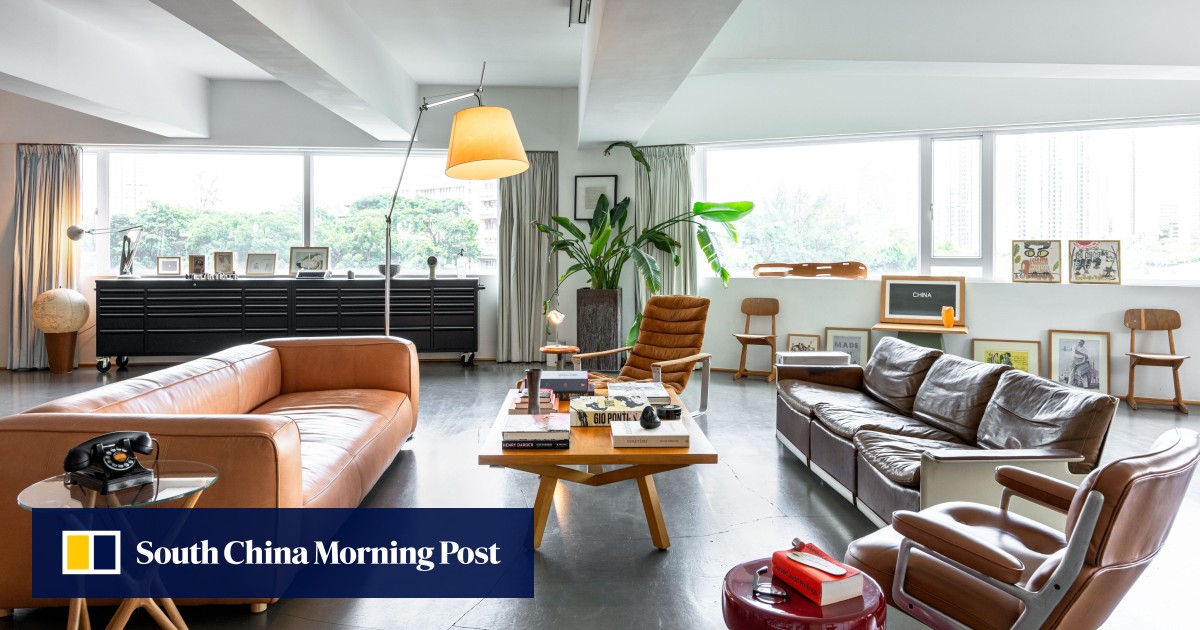
On the lookout for a second showroom/office in Hong Kong, he settled on this loft, where little had to be changed. That included a large kitchen at one end of the main space – Dix loves to cook and entertain clients – and all the fittings down to the coffee machine and grinder.
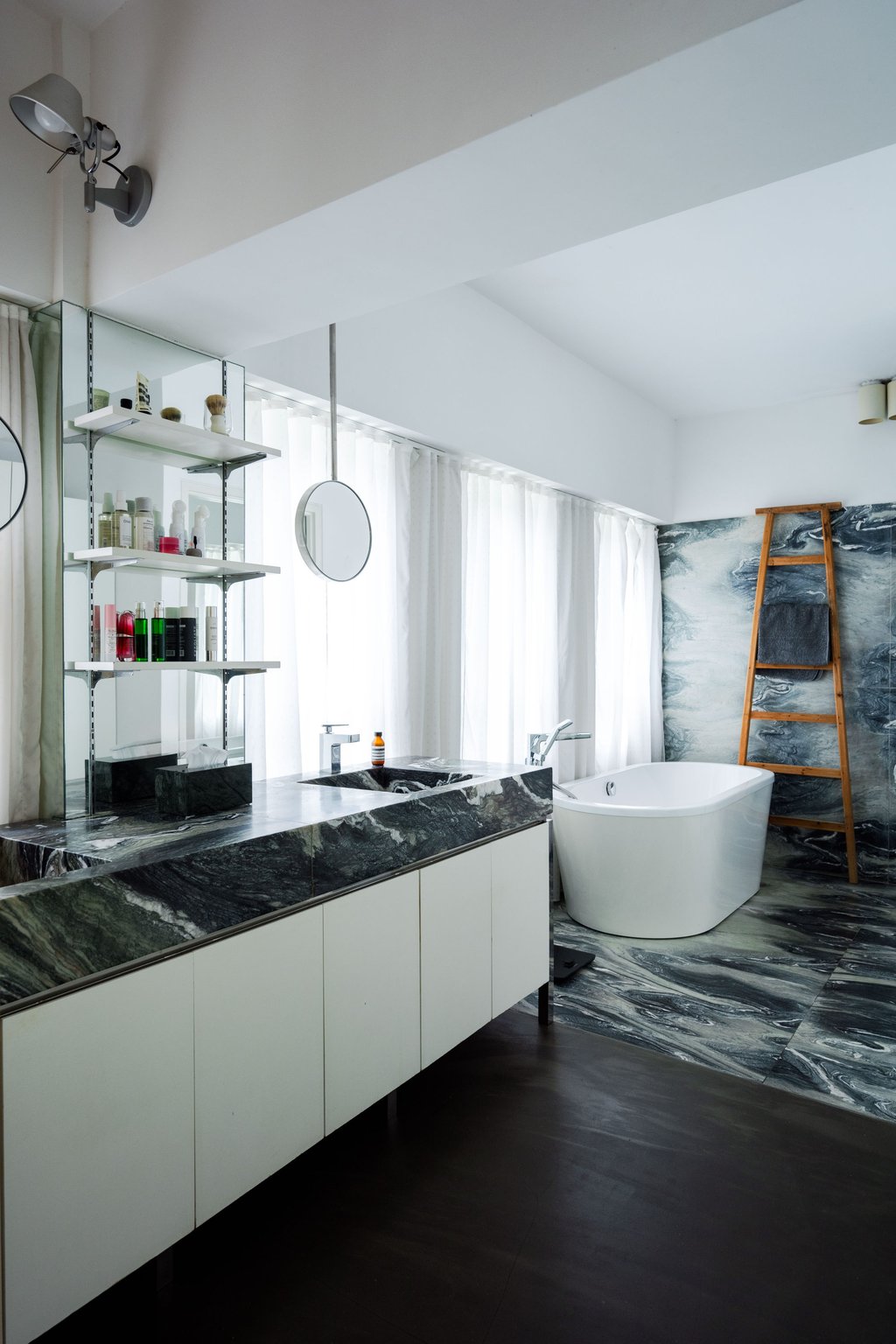
Similarly, the spacious main bathroom, which features marble tiles and granite slabs, suited his aesthetics, as did the white walls and grey epoxy flooring.

“My most important intervention was the lighting,” he says. “In some areas, the former tenants had fitted glaring, hospital-room-white lights; elsewhere there were whole expanses of nothing. It was horrific.” Out went the overhead fluorescent tubing and in came warmer light sources, placed in various areas at different levels including within plant pots. Dix also installed hidden LED strips to backlight his vintage rosewood shelving unit by Poul Cadovius, a work of art in itself, which features an impressive collection of books and curios found everywhere from antiques shops to flea markets to online stores.
Elsewhere, the focus is on pieces he created himself mixed with rare collectibles and the odd item unwanted by others. For Dix, one man’s trash is often his personal treasure.
Hailing from Kansas City, in the United States, he left home for California at 17 and needed to furnish new digs with barely a dime to his name. His love for vintage pieces was thus born of necessity.
Trawling through junk shops near the San Diego naval base, he found a lot of “interesting, vintage stuff that nobody wanted” and, as well as fulfilling his mission to kit out his home, he developed a lifelong passion for mid-century modern and industrial styles.
“While I do have a few of my own pieces here, I generally prefer to be surrounded by inspiration from having other people’s things about the place, particularly practical designs made for factory workers,” he says. “Mid-century industrial designs are rooted in functionality. Some pieces wouldn’t have even registered back then as anything but practical but now, set in isolation 70 or so years later, there is something raw yet attractive about them, like this Italian fingerprinting table, which came from a police station in Monza.”
Placed by the front entrance, the little grey metal stand now has a more salubrious function for keys and other sundries, its angular form contrasting with the softer, rounded contours of a Dix-designed shoe cabinet.
Above it is an old classroom map of Asia, a gift from his father, who caught the collecting bug from his son.
“If something catches my eye, I buy it even if I don’t really need it. Only afterwards do I find a place to put it,” he says. “None of this is a proper collection – I just find cool stuff and make it fit.”
Entrance
Above a shoe cabinet designed by Dix (seandix.com) is a classroom map of Asia, which was found in a Kansas City antiques shop and was a gift from Dix’s father. To the left is a CCTV cardboard sculpture made by Los Angeles-based artist Bill Barminski (barminskiart.com) and a vintage Soviet enamelled sign, with boots, bought on eBay (ebay.com) from someone in Bulgaria. A 1950s Marelli oscillating fan and a fingerprinting stand, originally from Monza police station, in Italy, were both picked up from an antiques market in Milan. The circular mirror and floor lamp were also designed by Dix. The vintage Glove bag is by Maison Margiela (maisonmargiela.com).
Room detail
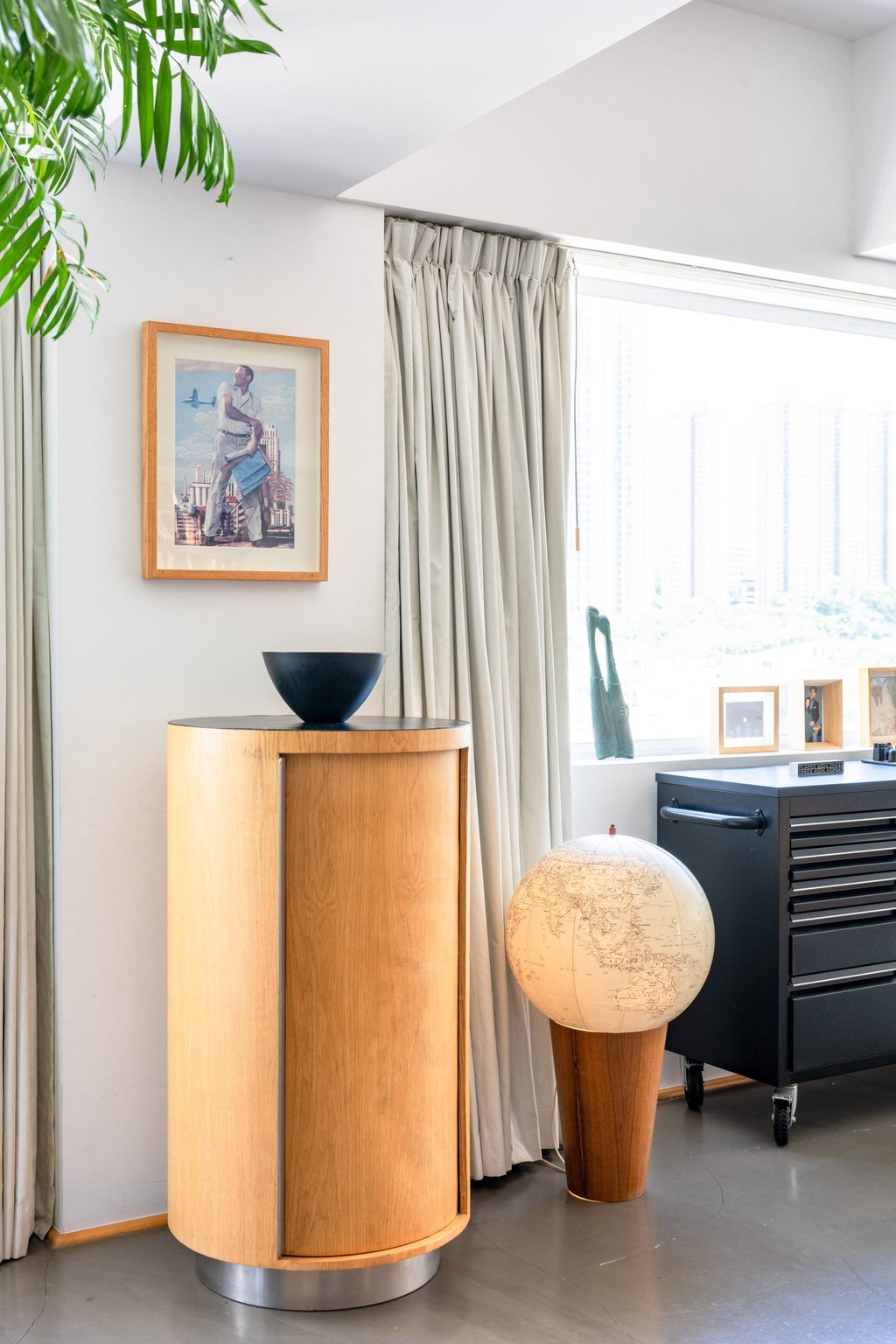
The Kansas City Spirit print by Norman Rockwell was picked up in Kansas City and the cylindrical cabinet was designed by Dix. The 1950s enamelled Krenit bowl was bought in a vintage store in Copenhagen, Denmark, and the inflatable globe was a gift from Dix’s father.
Living area
An artwork by American abstract painter Agnes Martin is positioned behind the plant in the main living space. Next to it, on a windowsill, is an Eames wooden splint from a vintage shop in Chicago, in the United States, the proprietors of which had found a stack of them abandoned in a military warehouse. The 1960s German school chairs came from an antiques shop in Tokyo, Japan. The artworks China and Made in USA (just visible) are by Ed Ruscha and the two square pieces on the windowsill are by Ling Meng. Dix designed the side table and owl, as well as the Forte coffee table, Triple X glass-topped side table and scarlet lacquered fibreglass stool. On the Saturn stool, also by Dix, is a Spider lamp by Joe Colombo that was designed for Oluce (oluce.com). The Bell 302 telephone was found in a San Diego junk shop and restored by a friend. The Tolomeo Mega floor lamp, by Michele De Lucchi for Artemide, came from MyConcept Hong Kong (myconcept.com.hk). Between the two sofas, the Pulkka armchair by Ilmari Lappalainen was bought online from a vintage dealer. On the right, next to the 620 sofa by Dieter Rams for Vitsoe (vitsoe.com), is an antique aluminium Halliburton suitcase, which belonged to a friend’s grandfather. The Lobby chair by Eames was found in a junk market in Milan, Italy, and restored by Dix’s factory in Guangzhou.
Main bathroom
Cloud Atlas marble was used for the sculpted sink, flooring and wall. All fixtures are by American Standard (americanstandard-us.com).
Main bedroom
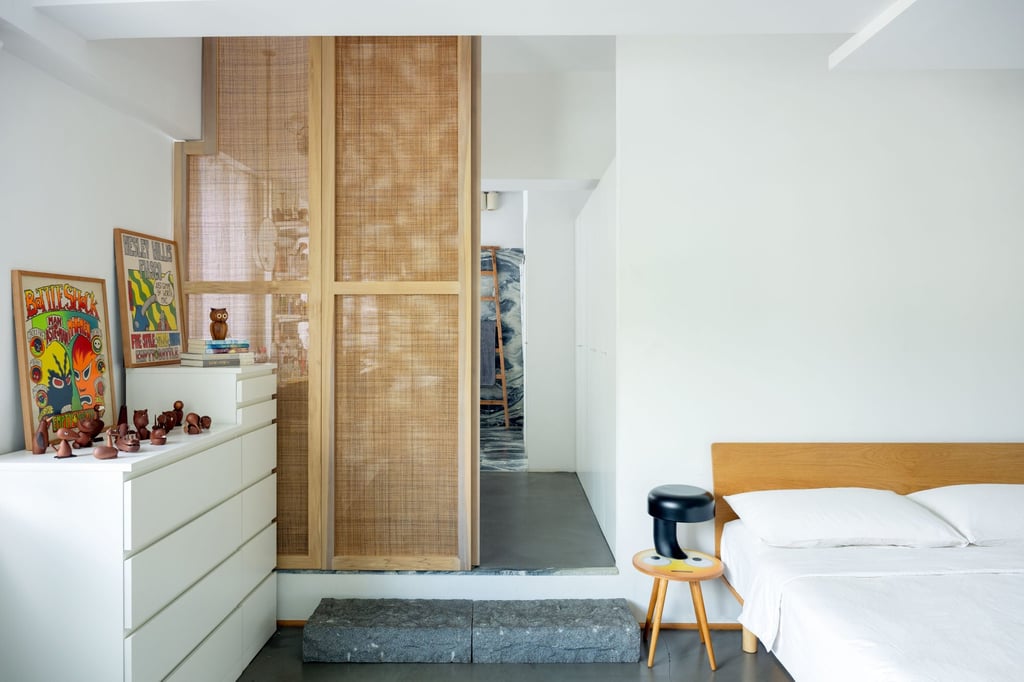
The bed was from Muji (muji.com) and the emoji bedside table was made by Dix for a trade fair. The screen door and granite steps leading to the bathroom were designed and installed by Dix. The Bottle Shock and Wesley Willis Fiasco prints are by American artist Colin Frangos (colinfrangos.com) and the 1960s Senshukai Royal Pets teak sculptures have been collected over time from Tokyo antiques markets and online. The table lamp is as before.
Dining area
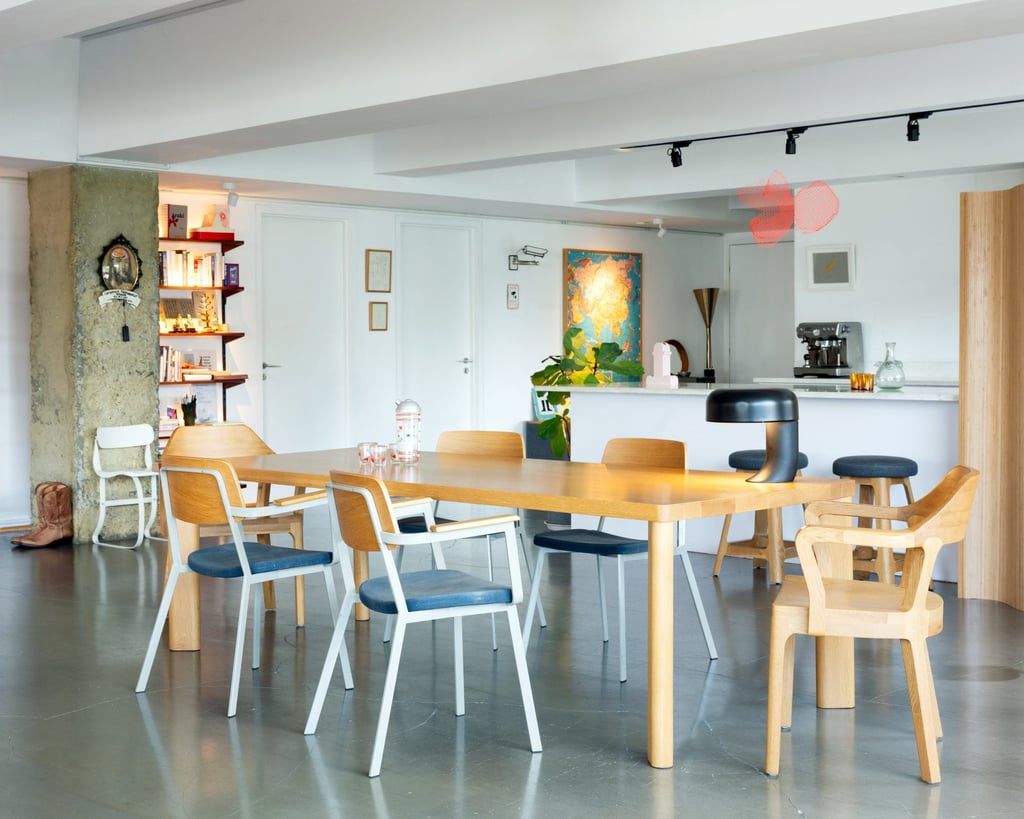
Next to the column is more Poul Cadovius shelving, bought at the same time as the main unit. The dining table and chairs were designed by Dix. The 1973 Shiva vase on the kitchen counter is by Ettore Sottsass for BD Barcelona Design (bdbarcelona.com) and the 1970s black 615 table lamp by Elio Martinelli for Martinelli Luce (martinelliluce.it).
Kitchen
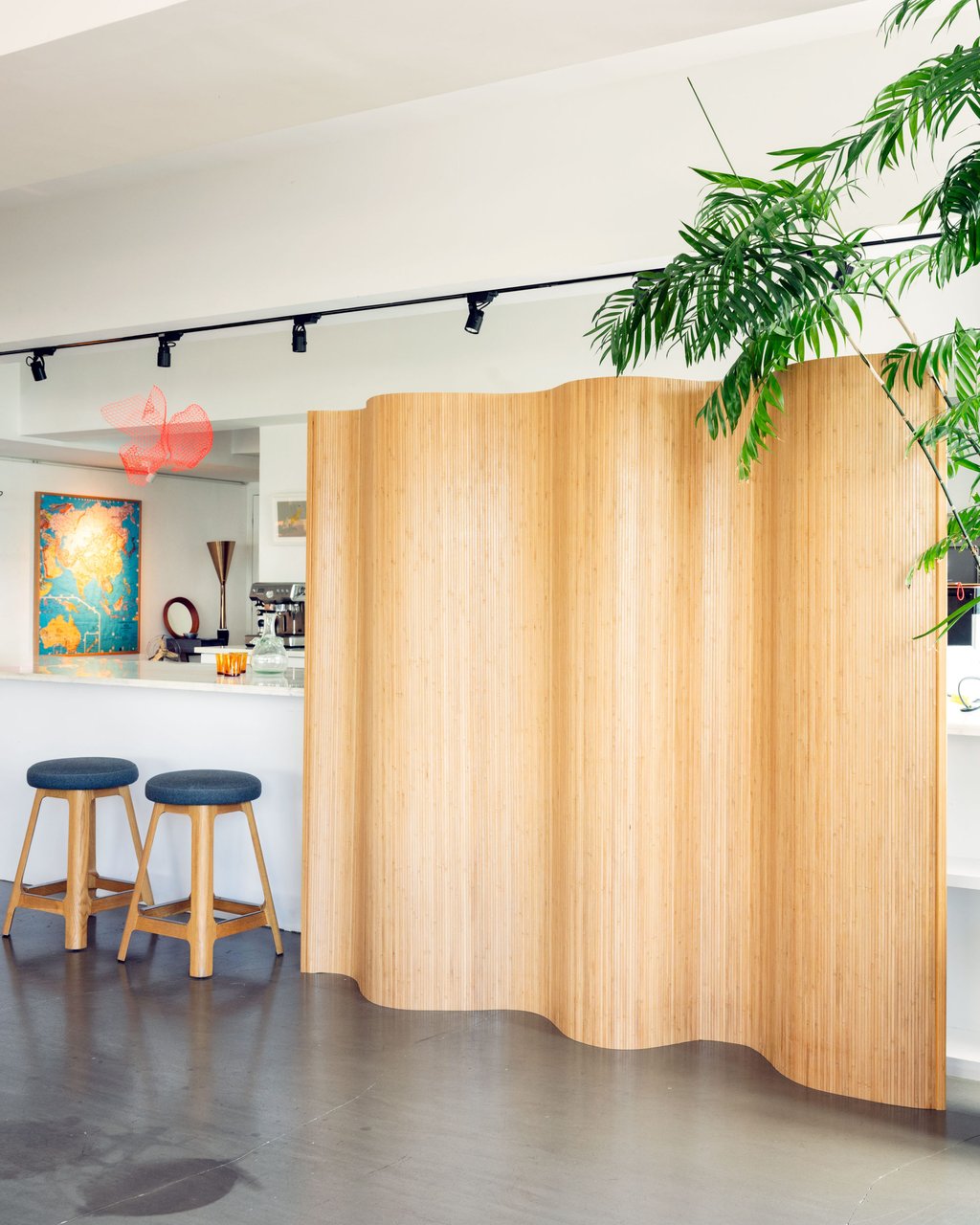
Carrara marble was used for the kitchen island. The Street stools in oak and wool felt were designed by Dix and the bamboo screen was from Wool Studio (woolstudio.co). The track lighting came from Beam Factory and the chicken wire fish sculpture is by Benedetta Mori Ubaldini (rossanaorlandi.com), an old friend from Milan.
Tried + Tested
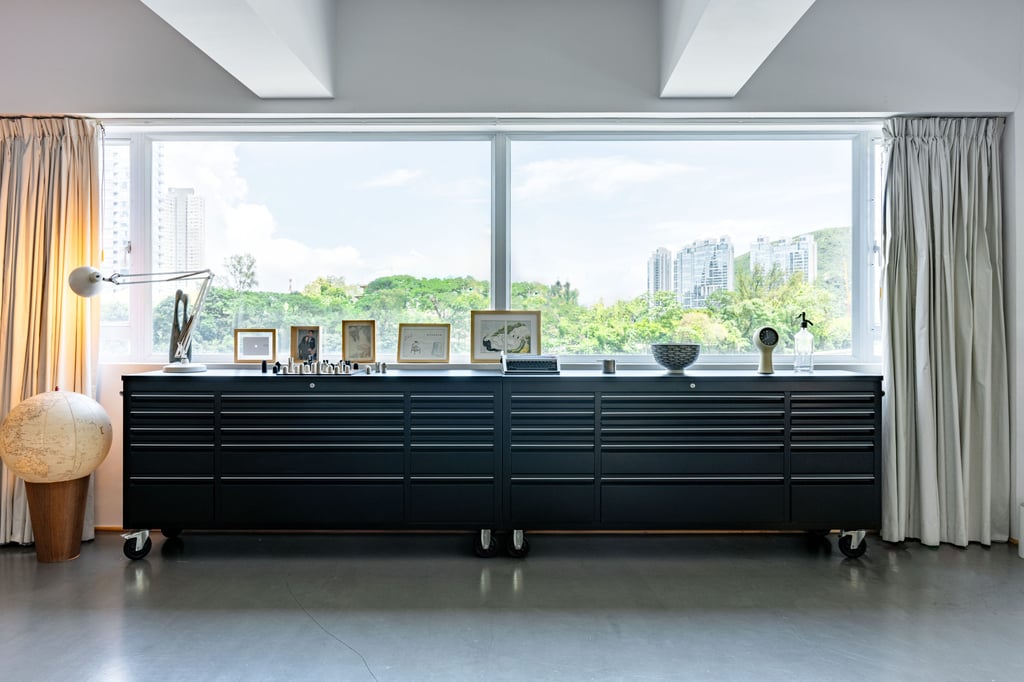
Dix bought standard black tool chests on wheels, typically used by car mechanics, from Dongguan Hyxion Metal Technology (hyxion.com) and repurposed them as a storage and display cabinet. “I love anonymous, practical design for workers,” says Dix. “These were a great example: durable, no-nonsense and reasonably priced. In a previous flat, they were positioned back-to-back as a kitchen island.”
link