Why UX Debt Kills Conversions and How to Prevent It

Key Takeaways:
- Ignoring UX debt can quietly kill conversions, even functional products underperform when small usability issues erode user trust and create friction.
- Mapping user journeys, embedding usability metrics, and testing prototypes early help prevent costly redesigns later.
- High-performing teams treat UX as a cross-functional priority, not just a design concern.
A well-crafted user experience (UX) design can significantly impact conversion rates, according to UXCam. The data shows that increasing the UX development budget by just 10% can lead to an 83% boost in conversions.
But despite those numbers, UX is still one of the most common casualties of tight deadlines and shifting product priorities. This leads to an unintentional accumulation of UX debt, small usability issues that quietly chip away at user trust and suppress conversion rates.
Agencies like Outecho, which specialize in software development for web and mobile products, often encounter this challenge when stepping into projects already in progress.
Editor’s Note: This is a sponsored article created in partnership with KOPI.
But when UX is prioritized early — during scoping, development, and testing — that debt can be avoided entirely.
Here’s how UX debt creeps in, what it costs, and what high-performing teams do to stay ahead of it.
UX Debt: What Is It & Why Is It So Dangerous?
UX debt happens when user experience problems go unresolved during the build phase. This includes anything from confusing navigation and unclear copy to slow load times and broken flows.
The problem? These issues don’t always trigger alarms. Your product might be functional. Your tests might pass. But your users still bounce, and your conversion rates never reach their full potential.
“UX debt is like hidden friction in your product, those small usability hiccups that compound over time, eroding user trust, driving up support costs, and dragging down conversions,” said Enis Kovac, CTO of Outecho.
When agencies like Outecho step into a project midstream, we often see features built without user flows in mind, turning routine tasks into frustrating detours. By prioritizing UX from scoping through testing, you eliminate these silent blockers and keep your conversion funnel flowing smoothly.”
Left unchecked, UX debt forces teams into expensive redesigns — or worse, leads to stalled growth because the product simply doesn’t feel good to use.
Fortunately, the signs of UX debt are fairly easy to spot. They include:
- High drop-off rates during onboarding or checkout
- Repeated support tickets for “how do I…” questions
- Users engaging with only a fraction of available features
- Low activation despite healthy acquisition
3 Early-Stage Tactics to Eliminate UX Debt Risks
1. Use discovery to find friction before it’s built in
In many projects, discovery focuses on business goals and feature lists — but without understanding user behavior, teams miss critical UX risks.
It’s not just about what the product does, but how people expect it to work.
Mapping key user journeys early — especially around conversion points like sign-up or checkout — helps surface likely friction before it’s baked into development.

Teams that also analyze competitor UX patterns or gather feedback on early wireframes can spot usability issues long before they show up in KPIs.
2. Prioritize usability as much as functionality
One of the most common drivers of UX debt is the assumption that usability is owned solely by the design team.
In reality, development choices, project timelines, and even copy decisions all influence how users experience a product.
Successful teams embed UX thinking into their entire workflow. That means aligning sprints around both functional requirements and usability benchmarks.
For example, instead of only checking if a checkout flow works, teams ask whether users can complete it in under two minutes without confusion.
When usability is part of the project’s core acceptance criteria — not an afterthought — it becomes far easier to prevent costly problems later.
“At Outecho, we keep usability front and center by establishing a shared design system, running weekly UX syncs with developers and designers, and embedding clickable prototypes into our sprint demos,” said Kovac.
“We tie every story to measurable usability metrics, task completion rates or time-on-task, and review them in our retrospective, ensuring everyone stays focused on smooth, intuitive flows from day one to launch.”
3. Test early. Test small. Test often.
Waiting until final QA to evaluate UX is often too late. By then, changes are expensive and time-consuming.
But you don’t need polished interfaces to validate usability. Even simple wireframes or prototypes can reveal where users hesitate, misunderstand, or drop off.
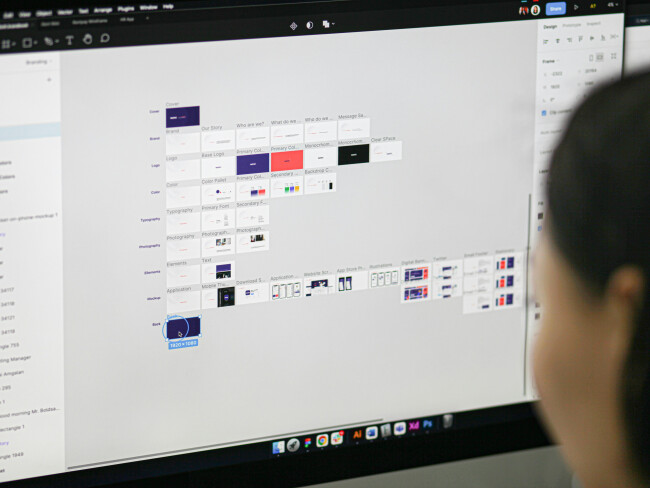
In early-stage testing, observing someone unfamiliar with the product try to complete a basic task often allows unexpected issues to surface.
These small, friction-filled moments are the early signs of UX debt — and catching them early is significantly cheaper than fixing them post-launch.
The Bottom Line
UX debt leads to lower conversions, higher churn, and costly redesigns down the line.
And because it doesn’t always trigger immediate red flags, it’s easy to miss.
Preventing UX debt is about working smarter:
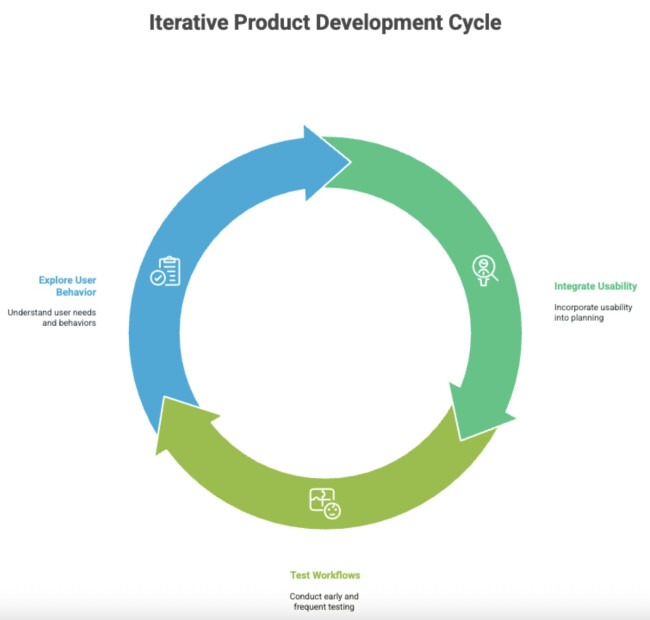
- Use discovery to explore user behavior, not just business requirements.
- Bake usability into planning, not just design.
- Test real workflows early and often, before they hit production.
It’s a mindset shared by product-focused development teams like Outecho, who often work on projects where UX debt has already taken hold — and see firsthand the impact of prioritizing usability from the start.
It’s a mindset shared by product-focused development teams like Outecho, who often work on projects where UX debt has already taken hold — and see firsthand the impact of prioritizing usability from the start.
“True agility means shipping fast without shortchanging the user. At Outecho, we embed UX checkpoints into every sprint, pairing rapid feature delivery with quick heuristic reviews and prototype testing. This lets us catch usability issues in real time, so we maintain development velocity while ensuring each release feels intuitive and polished,” said Kovac.
When you do the same, you don’t just improve your product — you increase its chances of real, sustained growth.

B2B Reporter
Andrea ‘Andi’ Surnit is a writer with over eight years in journalism and marketing. She started her career as a junior news reporter before transitioning to digital marketing at Razza Consulting Group, where she advanced to the role of Lead Writer. Throughout her career, she has cultivated expertise in ad copy, web content, client servicing, social media, and SEO. Currently, Andi writes for Spotlight at DesignRush, covering the latest trends in brand campaigns and agency news.
link